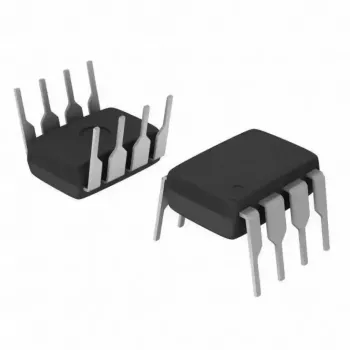
- Stock:
- Model: A0380.74HC595D
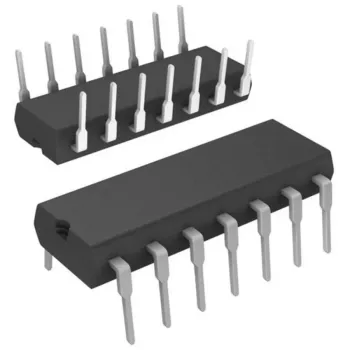
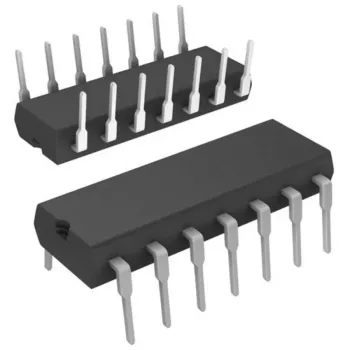
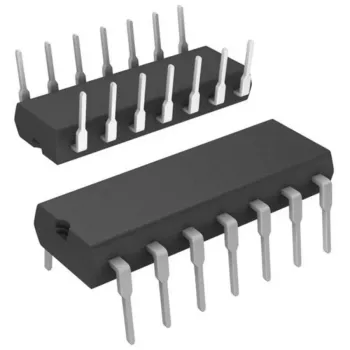
74HC595D SMD Shift Register IC — 8‑Bit Serial‑In, Serial/Parallel‑Out
The 74HC595D is a high‑speed CMOS 8‑bit shift register in a compact SMD SOIC‑16 package. It features a serial data input (DS), shift clock (SHCP), output enable (OE), and master reset (MR), enabling efficient serial‑to‑parallel data conversion. Ideal for expanding microcontroller I/O on Arduino, Raspberry Pi, and other embedded platforms, this device is well‑suited for LED driving, control panels, and high‑speed digital data handling.
Key Features ⭐
- 8‑bit serial‑in, serial or parallel‑out shift register architecture
- Control pins: DS (Serial Data), SHCP (Shift Clock), OE (Output Enable), MR (Master Reset)
- Output capability: Standard (HC logic, non high‑current)
- ICC category: MSI (Medium‑Scale Integration)
- Package type: SMD SOIC‑16 for automated assembly
- Cascadable via serial output for extended word lengths (daisy‑chain multiple devices)
Technical Specifications 📐
- Operating supply voltage: 2 V to 6 V
- Operating temperature range: −40°C to +125°C
- Propagation delay: 13 ns
- Maximum clock frequency: 100 MHz
- Logic family: 74HC (high‑speed CMOS)
- Pin count / package: 16‑pin SOIC (SMD)
Typical Applications 🧩
- Serial‑to‑parallel data conversion for digital control
- Remote control and automation systems
- LED matrix, bargraph, and seven‑segment drivers
- High‑speed digital data processing systems
- GPIO expansion for Arduino, Raspberry Pi, and other microcontroller platforms
Integration Tips for Arduino & Raspberry Pi 🤖
- Use standard SPI‑style lines: data, clock, and a latch/update control (often labeled STCP on schematics).
- For 3.3 V systems (e.g., Raspberry Pi), power the IC at 3.3 V for direct interfacing. If the IC is powered at 5 V, use level shifting to protect 3.3 V logic.
- Chain multiple 74HC595 devices to expand outputs in 8‑bit increments with minimal pin usage.
Why Choose This IC? 🔧
Engineered for high‑speed operation with low power consumption, the 74HC595D is a dependable choice for designers and hobbyists building electronics modules and projects requiring efficient I/O expansion. It integrates seamlessly with popular electronics components and development ecosystems, including Arduino and Raspberry Pi, while offering a wide voltage range and robust temperature performance.